A state police spokesperson says 28-year-old Brandon Pearson lost control of his car and hit a tree on I-64 in James City County early Friday morning.
More than 100 people crowded outside the Webb Center quad as they honored and celebrated the life of Pearson.
“He was someone who cared about other people. He sacrificed for other people and so to Brandon’s family, thank you for sharing him with us," said one of Pearson's Alpha Phi Alpha fraternity brothers as he addressed the crowd.
Pearson's family, fraternity and closest friends lit candles and spoke about the lasting impact the beloved DJ has made at ODU, in Hampton Roads and all over the world.
TONIGHT: More than 100 people gathered in the Webb Center quad at ODU to honor 28yo Brandon Pearson. Pearson, a well-known DJ, died in a car crash Friday. The story tonight on @WAVY_News at 10 and 11. pic.twitter.com/kfEPOY4lel
“He would not want us to go out sad you know that," said Pearson's sister Brittany.
Pearson is described as a funny, charismatic guy who had a passion for living life to the fullest.
“Just amazing and loving. He had an affectionate smile. He loved ODU. He loved it a little bit too long for the finances," said Pearson's mother, Gwen.
State police say Pearson was driving a 2017 Nissan Rogue at a high rate of speed Friday morning when he lost control, ran off the road and hit a tree. He died before paramedics could get him to the hospital.
Pearson's family has started a GoFundMe to help with funeral expenses.
Get the free WAVY News App, available for download in theApp StoreandGoogle Play, to stay up to date with all your local news, weather and sports, live newscasts and other live events.
After high temperatures on Halloween peaked around 70°, it should hold as the warmest day over the next seven to ten. As the first week of November is upon us, cooler and more traditional sweater weather moves into the region.
It'll remain seasonally cool for the next day or so - which means temperatures dropping to near 50° tonight, with 40s expected for inland locations away from the waterways. A few clouds stream in & out tonight, then setting up a bright, blue sky Monday. Highs tomorrow should hold in the mid 60s, then similarly into Tuesday. However, by Tuesday, changes approach the region.
Cool air is reinforced this week.
Clouds increase into Tuesday afternoon as a cold front will drop through Hampton Roads. A few showers will accompany it, likely later in the afternoon and evening, but what we'll notice more is the cooler air behind the front.
Highs likely in the 50s through weeks end.
Temperatures Tuesday night should drop into the 40s, but our afternoon highs will hold in the 50s! The cooler air will keep highs in the 50s (with lows in the 40s) through the end of the week, with another shot of rain possible by Friday.
Out in the tropics, we've exhausted the 2021 list of tropical cyclone names. Subtropical Storm Wanda developed late Saturday night way out in the north-central Atlantic ocean. The system is expected to meander for a few days before moving into the colder waters to it's north.
All of the tropical cyclone names for 2021 have been checked off the list.
While additional tropical development is not likely over the next week or so, there's still one more month of hurricane season. If another system comes along, the National Hurricane Center has done away with the usage of the Greek alphabet, and has created a supplemental list of names instead.
The first week of November brings the cooler air.
But we shouldn't have anything to worry about with the tropics for the next seven to ten days. Our focus will be on the cooler, November sweater weather on the way!
DALLAS (AP) — American Airlines has canceled more than 1,600 flights over the past three days, citing blustery conditions in Texas and a shortage of flight attendants.
The disruptions were similar in their initial cause and size to problems suffered in early October by Southwest Airlines, and they raised ominous questions about whether major airlines are prepared for the busy upcoming holiday travel period.
By early afternoon Sunday, American had canceled more than 800 flights — almost 30% of its schedule for the day — after scrapping nearly 900 flights on Friday and Saturday, according to tracking service FlightAware.
American's troubles began late in the week, when high winds at times shut down flights and prevented the airline from using all runways at its busiest hub, Dallas/Fort Worth International Airport. That made it difficult for American to get crews in position for upcoming flights, and the cancellations and delays grew worse through Saturday and Sunday.
“To make sure we are taking care of our customers and providing scheduling certainty for our crews, we have adjusted our operation for the last few days this month by proactively canceling some flights,” David Seymour, the airline's chief operating officer, said in a note to employees on Saturday.
Seymour said American was able to put most of the stranded travelers on other flights the same day.
A spokeswoman for American said the airline expects considerable improvement starting Monday, although there will be “some residual impact from the weekend.” By midday Sunday, American had canceled nearly 50 Monday flights, according to FlightAware.
Earlier in October, Southwest canceled well over 2,000 flights after disruptions that started with weather problems in Florida and were compounded by staffing shortages.
Airlines were barred from laying off workers during the pandemic as a condition of billions in federal pandemic relief — American temporarily furloughed 19,000 workers when the money lapsed last year, but reversed the furloughs when aid was restored. That, however, didn't stop the airlines from persuading thousands of employees to accept cash incentives and quit voluntarily. American, Southwest and others are now hiring employees to replace some of those who left in 2020.
Seymour said American is staffing up, with nearly 1,800 flight attendants returning to their jobs starting Monday and others on Dec. 1, and at least 600 new hires on board by the end of the year. He said the airline is stepping up hiring for other jobs including pilots and reservations agents in time for the holidays.
Get the free WAVY News App, available for download in theApp StoreandGoogle Play, to stay up to date with all your local news, weather and sports, live newscasts and other live events.
WASHINGTON (AP) — White House press secretary Jen Psaki said Sunday she has contracted COVID-19 and is experiencing mild symptoms.
Psaki, 42, said she was last in contact with President Joe Biden on Tuesday, when she met him in the White House, where they were more than 6 feet apart and wearing masks. Biden, who is tested frequently, last tested negative on Saturday, according to the White House.
Psaki did not accompany Biden on his trip abroad to Rome this weekend for the Group of 20 summit and next Glasgow, Scotland, on Monday for a U.N. climate summit.
Psaki had planned to travel with the president but scrapped the trip just as he was set to depart for Europe after learning that members of her household had tested positive for COVID-19.
“Since then, I have quarantined and tested negative (via PCR) for COVID on Wednesday, Thursday, Friday, and Saturday," Psaki said in a statement. “However, today, I tested positive for COVID."
Psaki said she is only exhibiting mild symptoms.
“While I have not had close contact in person with the President or senior members of the White House staff since Wednesday – and tested negative for four days after that last contact — I am disclosing today’s positive test out of an abundance of transparency," Psaki said.
White House staff and others traveling with the president have been undergoing daily tests for COVID-19 since before departing Washington and are all fully vaccinated. Many officials have also received booster shots, due to the close-quarters environment and frequent travel associated with their work.
Biden got his COVID-19 booster on Sept 27, shortly after federal regulators approved the third dose for many Americans.
Biden has been accompanied on the trip by principal deputy press secretary Karine Jean-Pierre. Psaki said she would return to work in person at the conclusion of a 10-day quarantine and following a negative rapid test.
RICHMOND, Va. (AP) — Democrat Terry McAuliffe and Republican Glenn Youngkin were making last-minute pushes Sunday to energize voters across Virginia in the final days of the competitive and closely watched race for governor.
With the state's lengthy early voting period finished, the campaigns turned their attention to Tuesday's finale, each trying to fire up his party's base to drive up turnout for an election that will be scrutinized as a bellwether ahead of next year's midterms.
McAuliffe, who served as governor from 2014 to 2018, and Democrats are scrambling to stave off disaster after public polling has shifted in Youngkin’s direction in recent weeks. Republicans are optimistic about their chances in the commonwealth, where they haven't won a statewide race since 2009.
After campaigning across northern Virginia on Saturday, Youngkin departed for the far southwest corner of the state. Stops along his bus tour included a prayer breakfast, a worship service, a barbecue at the home of a powerful state lawmaker, a meet-and-greet in the state's farthest-flung corner and an evening get-out-the-vote rally.
McAuliffe, who preceded Democrat Ralph Northam as governor in the only state that doesn't allow its executive to serve consecutive terms, spent Saturday in Virginia's southeastern corner before planning stops Sunday in suburban Richmond and northern Virginia.
In the backyard of a home in a well-to-do pocket of Henrico County, McAuliffe told an energetic crowd of supporters that “the stakes are huge" as he touted his record from his first term.
“I’ve done this job before. I was the most pro-business pro-progressive. I made this state open and welcoming, created a lot of jobs. We do not want to go back,” he said.
McAuliffe has brought in a series of high-profile surrogates including President Joe Biden, former President Barack Obama and celebrity musicians Pharrell Williams and Dave Matthews in the final stretch. Youngkin, meanwhile, has eschewed virtually all public campaign visits from well-known party allies who would typically flock to a hot race.
That includes former President Donald Trump, who is holding a telerally for Youngkin on Monday. Youngkin has said he will not be participating. Youngkin more fully embraced Trump during the Republican nominating contest, but since becoming the nominee, he has walked a fine line as he tries to court moderate voters in a state that Trump lost by 10 percentage points to Biden in 2020.
Saturday marked the final day for early voting, which has been dramatically expanded during the past two years of unified Democratic control of state government.
Legislation passed in 2020 eliminated excuses that were previously required in order for a person to cast a vote by absentee ballot. Now any qualified voter can cast a ballot starting 45 days before the election.
Over 1.1 million Virginians out of the state’s approximately 5.8 million registered voters cast a ballot early this year, according to state data published by the nonpartisan Virginia Public Access Project. That marks a dramatic increase compared with the mere 195,634 early votes the last gubernatorial cycle.
Saturday saw the highest single-day total, with over 100,000 votes cast.
Republicans, despite generally opposing the Democrats’ election reforms, have encouraged their supporters to vote early this year.
The hectic pace of campaigning was set to continue Monday. Both candidates will be crisscrossing the state, each with stops in Roanoke, Virginia Beach, the Richmond area and northern Virginia.
Polls will be open Tuesday from 6 a.m. to 7 p.m.
Get the free WAVY News App, available for download in theApp StoreandGoogle Play, to stay up to date with all your local news, weather and sports, live newscasts and other live events.
The mobile clinics will begin on Nov. 3 offering free COVID-19 vaccines in a series of community sites, primarily in rural and underserved areas.
“This mobile asset is a great addition to the cadre of opportunities currently available in the region in addition to the Military Circle Mall, our neighborhood pharmacies, and local providers,” said Dr. Parham Jaberi, Chief Deputy Commissioner for VDH and Acting Director for Norfolk and Portsmouth Health Districts.
The dates, times and locations of these mobile clinics for the coming week include:
November 3, 9 am – 12:00 pm, Emily Green Shores 500 Westmoreland Ave., Portsmouth
November 3, 3:30 - 6:30 pm, Portsmouth Health Dept. 1701 High Street, Portsmouth
November 4, 1:00 - 6:30 pm, Franklin Workforce Development Center 100 N. College Dr., Franklin
November 5, 10:00 am - 4 pm, Beach Grove United Methodist Church 4251 Driver Lane, Suffolk
The mobile clinics will offer the Moderna, Pfizer and the Johnson & Johnson vaccines, and pediatric (age 5-11) vaccines when available.
Get the free WAVY News App, available for download in theApp StoreandGoogle Play, to stay up to date with all your local news, weather and sports, live newscasts and other live events.
DAYTON, Ohio (WDTN) - Many Americans hold a superstition that black cats are dangerous or unlucky, however, the origin is not as widely known as the ideology itself. On National Black Cat Day, which is meant to being awareness to the low adoption rates and mistreatment of black cats, experts in the Miami Valley are shedding light on the origins and misconceptions associated with the theory.
“It begins with Pope Gregory IX in 1233 when he issues the papal bull, Vox in Rama, that began the Inquisition and the church sanction, heretic and witch hunts,” explained Meghan Henning, associate professor of Christian origins at the University of Dayton. “In that 1233 document, he says that black cats were an incarnation of Satan.”
Henning said today’s superstition was first rooted in a forced admission of witchcraft outlined in that document, which just so happened to include questionable stories about the felines.
“Initially, Pope Gregory IX was actually just responding to confessions that were elicited by Conrad of Marburg in Germany, via torture, in which practices of a satanic sect included kissing a black cat’s butt," she said.
The ideology spread through medieval Europe (not including England and a few other places), although many other cultures across the globe have opposing beliefs -- including that cats are actually lucky because their dark fur allows them to hunt more successfully.
However, the negative association from centuries ago has never completely gone away.
“The tie between witches and black cats stuck in part because of the respect that pagan cults and witches had for plants and animals, but also for gender reasons," said Henning. "Women who were accused of witchcraft were caricatured as questioning authority because they have independent thoughts…and cats are characterized as well, as being independent and aloof.”
Henning said while black cat Halloween decorations are a lot of fun, the tradition has a history that isn’t necessarily beneficial for cats or for people, and the negative stigma around them isn't true.
“I’ve had people tell me that they’re allergic to only black cats,” Kaitlin Becraft, marketing manager for SICSA Pet Adoption and Wellness Center said with a laugh." There are definitely people who are a little bit hesitant with them.”
On the other hand, she said, through an extensive vetting process, all of their pets are adopted out successfully and go to safe homes. Some people even get excited about adopting them around Halloween, recognizing that they are no different than cats of other colors.
“They’re still going to want to cuddle you and love you and everything and they don’t bring anything bad with them,” said Becraft. “We all have all different types of adopters who come in and get these little guys.”
For these reasons, both Henning and Becraft said black cats are not inherently unlucky, and if you see a black cat being abused or mistreated, you should reach out to your local animal shelter or law enforcement.
CLEVELAND (WJW) – The next advance Child Tax Credit payment scheduled for Nov. 15, but there's another deadline you may need to pay attention to this week.
The IRS said it's launching a new feature, starting Monday, Nov. 1, where families can update their income using the Child Tax Credit Update Portal, or CTC UP.
If you have had any change in income, the IRS said you need to update it by 11:59 p.m. Monday night in order for it to be reflected in your November payment. Once you make the update, the IRS will adjust the remaining payments so you'll receive the total advance payment for the year.
Could you qualify for a bigger payment?
If you get monthly payments that are below the maximum and you experienced job loss during 2021, or for some other reason are receiving substantially less income this year, you could qualify for more money. Reporting that change now (instead of when you file taxes) may increase the amount of your advance CTC payments for the rest of this year.
If you're not able to make the changes by Nov. 1, you can enter them by Nov. 29 so it'll show in the December payment.
For married couples, if one spouse makes the income update, it will apply to both spouses and could impact both spouses' future monthly advance payments of the Child Tax Credit.
(NEXSTAR) – It started with a targeted ad on Instagram – as many of my online shopping adventures do these days. There was a new app expanding service to the area where I live in Los Angeles that would allow me to swoop up leftover food from restaurants, grocery stores, cafes and bakeries for a fraction of the price.
The business has been operating in European cities for a while and has recently started expanding to cities around the U.S. As of publication, Too Good To Go was operating in Austin, Baltimore, Boston, Chicago, the D.C. area, New York, parts of New Jersey, the San Francisco Bay Area, Los Angeles, Portland, Philadelphia, Providence, Seattle, and a few more parts of the country. The company says on its website it plans to expand more in the coming months, but doesn't specify where or when. (Too Good To Go didn't respond to Nexstar's requests for comment.)
The app is pretty to easy to use. When you open it up, there are offerings from restaurants in your area with different pickup times and prices. Most of the options that I've seen in my area are so-called "surprise bags," a mix of items that will remain a mystery to you until you pick up.
A look at the Too Good To Go interface, which sells leftover food from businesses at a discount price. (Screenshot / Alix Martichoux)
Still, the prices were appealing – especially in pricey Los Angeles. Plus, I'm not a picky eater.
Too Good To Go sounded too good to be true. So I decided to try it out.
Attempt No. 1: Epic fail
My first attempt at trying Too Good To Go – to put it simply – did not work at all. I spotted a deal from a smoothie spot less than a mile from my apartment for $3.99. I paid through the app and was given a pick-up window in the early evening, right before the store closes.
This was one of those "surprise bags" so I had no idea what it would be, but I was intrigued to see what kind of goodies a high-end smoothie store had left over at the end of the day. The answer, it turns out, was nothing.
The employee at the store seemed genuinely confused when I showed up for my pick-up. "Nah, I'm good," he told me, as if I were selling him something, not vice versa. I explained how the app (supposedly) worked and he still didn't quite get it. I left empty handed.
If there's a silver lining to this failure, it's that Too Good To Go seems very prepared to deal with this situation. It took one tap of a button in the app to get me a refund.
Attempt No. 2: Things are looking up
Undeterred in my quest for cheap food, I decided to give Too Good To Go another shot. I wasn't ready to risk heartbreak at the smoothie shop (which wronged me once when I first moved to LA and accidentally purchased a $16 smoothie, but that's another story). I decided to try my luck at a pizza joint and scheduled a pickup window from 8 p.m. to 9 p.m.
When I arrived at the empty pizza restaurant, I was once again met with a bit of confusion. But there was a happy ending this time. A little bit of explaining and they started packing up my order: four massive slices of pizza – the kind where one slice counts as a meal – each with different toppings like mushrooms, garlic and ricotta.
I ended up with four meals for $4.99. Not too shabby.
Attempt No. 3: Getting the hang of it
By my third try, I walked into the French bakery with confidence and my redemption code ready. The employee who greeted me also knew what she was doing this time. She jotted down my code from the app, ran to the back of the store for a quick minute, then came back and loaded me up with a bag of pastries.
I got all this for $4.99 – not bad in a city where you could easily pay that much for a single croissant.
An assortment of pastries from Le Pain Quotidien purchased on the Too Good To Go app for $4.99. (Photo: Alix Martichoux / Nexstar)
This was the bag of food that won me over. If this would otherwise be tossed out at the end of the day – like Too Good To Go advertises – it seems like a win-win: cheap food for me, less waste for the business.
But in my experience so far, being flexible is key. You have to be OK with fixed pick-up times, a mystery assortment of goods, and the chance that you might end up with nothing every once in a while. I wouldn't rely on it for my weekly meal planning, but I'm not the kind of person who turns down a discount. Or a pastry.
(The Conversation) - Albino Luciano, better known to the world as Pope John Paul I, reigned as pope for only 34 days before his death in September 1978. But he will soon join the ranks of 20th-century popes who the Catholic Church has canonized. This literally means they have been entered on the “canon,” or list, of people formally declared to be in heaven and have been granted the title “Blessed” or “Saint.”
The process requires a rigorous examination of the life and holiness of a candidate and involves several stages that can last years or even centuries.
After someone with a reputation for exceptional holiness dies, a bishop can open an investigation into their life. At this stage, the person can be granted the title “Servant of God.” Further details and research are needed for them to be recognized as “Venerable,” the next stage in canonization.
The following step is beatification, when someone is declared “Blessed.” This usually requires that the Vatican confirm that the person performed a “miracle” by interceding with God. Two miracles are required before a “Blessed” can be declared a saint.
What, then, is a miracle?
More than medicine
The word is used widely in nonreligious ways. However, the Catechism of the Catholic Church, which sums up the church’s teachings, defines it as “a sign or wonder such as a healing, or control of nature, which can only be attributed to divine power.”
In the canonization process, a miracle almost always refers to the spontaneous and lasting remission of a serious, life-threatening medical condition. The healing must have taken place in ways that the best-informed scientific knowledge cannot account for and follow prayers to the holy person.
Pope John Paul I’s beatification was greenlighted by the sudden healing of an 11-year-old girl in Buenos Aires who had been suffering severe acute brain inflammation, severe epilepsy and septic shock. She had been approaching what doctors considered almost-certain death in 2011 when her mother, nursing staff and a priest began praying desperately to the former pope.
The bigger picture
Catholic belief in miracles is long-standing and rooted in what the church believes about the life and work of Jesus of Nazareth. The Gospels portray Jesus as a teacher, but also as a wonder-worker who turned water into wine, walked on water and fed a large crowd with minimal food.
As a Catholic theologian and professor, I have written about saints, especially the Virgin Mary, and taught university courses on hagiography, or writing about saints’ lives. In Catholic tradition, miracles represent more than physical healing. They also confirm what Jesus preached: that God is willing to intervene in people’s lives and can take away their suffering.
For Christians, then, Jesus’ miracles suggest strongly that he is Son of God. They point to what Jesus called “the reign of God,” in which Christians hope to be reunited with God in a world restored to its original perfection.
Devil’s advocate?
Naturally, thoughtful people can object to the claimed supernatural origin of such events. And the development of medical science means that some healing processes can indeed now be explained purely as the work of nature, without needing to claim that divine intervention has been at work. Some Christian writers, notably the Protestant theologian Rudolf Bultmann, have also interpreted Jesus’ miracles as having a purely symbolic meaning and rejected them as being necessarily historical, literal truth.
The Catholic Church has for centuries held that science and faith are not sworn enemies but rather different ways of knowing which complement each other. That understanding guides investigations of supposed miracles, which are undertaken by the Vatican’s Congregation for the Causes of Saints, which has about two dozen staff and more than 100 clerical members and counselors.
Theologians working for the Congregation assess all aspects of the life of a candidate for canonization. These include the “Promoter of the Faith” (sometimes called “the Devil’s advocate”), whose role was changed in 1983 from finding arguments against canonization to supervising the process.
Separately, a medical board of independent scientific experts is appointed to investigate a claimed miracle. They begin by looking for purely natural explanations as they review the medical history.
New rules
The process of canonization has undergone continuous revisions throughout history.
The Catholic groups who request to open a canonization case for a particular person fund the investigation. Costs include fees paid to medical experts for their time, administrative expenses and research. But cases were often opaque and expensive, reaching well into the hundreds of thousands of dollars, Italian journalist Gianluigi Nuzzi wrote in a 2015 book.
Among Francis’ 2016 reforms was a new rule that all payments be made by traceable bank transfer so groups can better track the Vatican’s spending.
Another of Francis’ reforms is that in order for a canonization case to go forward, two-thirds of the medical board are required to affirm that the miraculous event cannot be explained by natural causes. Previously, only a simple majority was needed.
The overall point of these reforms is to protect the integrity of the canonization process and avoid mistakes or scandals that would discredit the church or mislead believers.
Since Catholics believe that the “Blesseds” and saints are in heaven and intercede before God on behalf of people who seek their help, the question of miracles is a matter of being confident that prayers can and will be heard.
(KTLA) - Chailyn Thorne, 18, suffers from tics, some of them so severe that she feels paralyzed.
The uncontrollable movements and sounds even put the Arkansas teen in a hospital bed.
"I couldn't move," she said. "I could see everything. I could hear everything. I just wasn't able to get myself out of it until the tic was gone."
It's not something she was born with, however. Thorne may have developed the tics in response to TikTok.
Summer Hope, also known as @that_tourettes_girl on TikTok, has garnered more than 2.3 million likes on the platform.
Hope, a Florida resident, advocates for people with Tourette Syndrome and hopes her posts are a support system, though she's worried about what's happening.
"I do feel bad that if they are watching my videos and they are picking up my tics, there is definitely a sense of remorse there," Hope said.
John Piacentini, director of the UCLA Child OCD, Anxiety, and Tic Disorders Clinic and Tourette Association Center of Excellence, recently co-published several papers on the topic, and he says the girls' symptoms are real.
"They're seeing all these influencers that appear to have very robust and happy lives, and Tourette's becomes contagious in some ways," Piacentini said.
He added that mimicking behaviors is "a natural phenomenon," but "the scope and the scale is beyond anything we've ever seen before."
Doctors are worried as well. In the past, UCLA experts would see a case or two each year of tics linked to social media, but that number is now 10 to 15 each month.
"That's terrifying for any parent out there," said Marc Berman, executive director of the Organization for Social Media Safety.
Berkman isn't proposing that parents forbid their children to use social media, but they should talk about their concerns with their kids.
"Let's be aware of this danger," Berkman said. "How can we make this a safer activity?"
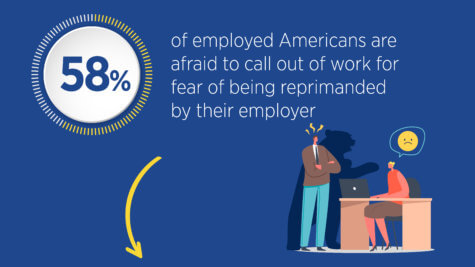
NEW YORK CITY (StudyFinds)— Fear of retribution is keeping sick Americans from taking a day off from work. A new study polled 2,000 employed Americans about the stress of taking time off work and found that 58 percent avoid calling out for fear of being criticized by their employer.
While the COVID-19 pandemic has Americans taking their health more seriously than ever, half of respondents feel discouraged by their workplace to call out to take care of themselves when feeling under the weather. Black and Latina women feel this more than other Americans, as they are 10 percent more likely than white women to say they avoid sick days for fear of being reprimanded by a boss.
Working through illness
Conducted by OnePoll on behalf of Theraflu, the survey finds 55 percent have to give their managers a reason for calling out. Of this group, two in three feel like their bosses never believe their reason.
As a result, respondents have continued going to work while sick an average of three times within the last year. Nearly three in five (58%) even reported pushing themselves to clock in unless their symptoms are so severe, they can’t get out of bed.
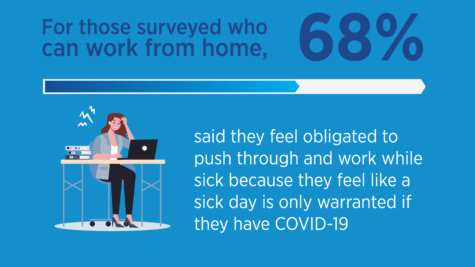
Among Americans that can work from home (just over 1,700 respondents), 68 percent feel obligated to clock in at home rather than take a sick day – citing that they believe they only need to use a sick day if they have COVID-19.
This pressure and the increased ability for many to work from home exacerbates societal pressures to power through, continuing to work when sick. To that point, the average respondent has only called out sick three times over the past year. Furthermore, 68 percent of the poll say they will push through and go to work in some capacity because they “can’t afford” to take a sick day.
Staff shortages also contribute to this, as 63 percent of respondents feel guilty for taking a sick day because it places a burden on their co-workers.
“It’s unfortunate to see data showing so many Americans are avoiding taking the time their body needs to rest and recover when they’re sick, but it’s not surprising given the systematic barriers and cultural stigmas associated with sick days,” says Sameer Rabbani, Marketing Lead, Respiratory Health at GSK Consumer Healthcare, in a statement.
Can’t afford sick days?
This trend seems to be due to the fact that taking time off while ill is a financial strain, which 64 percent of respondents agree with.
In fact, Black and Latina women respondents reported they often avoid taking time to rest and recover because of the financial strain. The results show Black women are 14 percent more likely and Latina women are eight percent more likely than white women to say taking an unpaid sick day causes financial strain for her family.
In addition, two in three workers often have to put the needs of their family before their own health or need for a sick day. It’s a pressure Black women say they feel more dramatically, who are 10 percent more likely than white women to use sick days to care for someone else.
“Now more than ever, it’s important to take care of yourself for your own health, as well as that of your loved ones,” Rabbani adds.
“The ability to rest and recover should be a right, not a privilege. We’ve commissioned this research to support some of the 68 percent of employed Americans who work while sick because they can’t afford to take a sick day – and to help announce our Rest & Recover Fund, a microgrant program designed to help reimburse approximately lost wages from 1,000 unpaid sick days.”
(NEXSTAR) – A new study of the nation’s most-searched recipes has revealed that banana bread, while still a favorite among America’s amateur bakers, is getting some serious competition from a couple of crumbly, creamy desserts.
The study, conducted by a food-sensitivity testing company called YorkTest, utilized data from millions of Google searches conducted in the United States, both in September 2020 and September 2021. The analysts then determined the top-searched recipes for baked goods and “calculated the difference in monthly searches” to find which recipes were surging in popularity — and which were getting stale.
Banana bread, according to the study, remains the most popular recipe. But searches for “banana bread recipe” on Google — while high in terms of total volume — have stayed stagnant since Sept. 2020.
Searches for “peach cobbler recipe,” however, have more than quadrupled, rising 306.06% since Sept. 2020.
“Like banana bread, a standard peach cobbler also requires ingredients that many people have in their pantry – sugar, flour, cinnamon, kosher salt, and you can even use canned peaches,” posits Kerri Ferraioli, a nutritionist with YorkTest, in a statement included at the website’s blog.
Other popular searches included “pumpkin cheesecake recipe” (which saw 123.97% more interest over Sept. 2020), “apple crumble recipe” (123.76% more interest),“monkey bread recipe” (82.43% more interest) and “strawberry shortcake recipe” (48.72% more interest). Cherry pie, blueberry muffins, lemon cake, biscotti and shortbread cookies also saw modest increases in interest over 2020.
Sinking closer to the soggy bottom of the list, recipe searches for apple pie, carrot cake and doughnuts saw decreased interest. Pumpkin pie suffered the biggest drop, with 75.41% fewer searches than Sept. 2020.
“While peach cobbler and apple crumble dominate the list, it’s interesting to see the drop in searches for pies and donuts, especially as the weather gets colder,” Ferraioli said. “Will we see people sipping on more peach cobbler lattes than pumpkin spice this fall?”
(TheRealDeal) - After months of U.S. home prices rapidly accelerating, new figures show the growth is slowing — not that bargain hunters are ready to whip out their wallets.
U.S. home prices rose 19.8 percent year-over-year in August, after July’s 19.7 percent annual increase, according to the S&P CoreLogic Case-Shiller U.S. National Home Price Index. The leveling off comes after four straight months of record-setting, increasing growth.
“August data also suggest that the growth in housing prices, while still very strong, may be beginning to decelerate,” said Craig Lazzara, managing director and global head of index investment strategy at S&P Dow Jones Indices.
Buyers should be wary, index co-creater Robert Shiller wrote in Project Syndicate Monday. Purchasing in booming locations may not be a safe long-term bet, he said.
“Even at currently elevated U.S. home-price levels, buying still makes sense for those who are set on ownership,” Shiller wrote. “But buyers need to be sure that they can accept what could be a rather bumpy and disappointing long-term path for home values.”Read more
The bursting of the housing bubble that triggered the Great Recession saw national home prices fall 36 percent from December 2005 to February 2012. (They have since risen 71 percent.) But that isn’t the only example of declining home values.
Shiller cited data that showed that U.S. home prices, adjusted for inflation, were often lower in the 1990s than they were a century ago. The drop came as cities spread out to cheaper land and homebuilding technology improved.
For buyers and sellers focused on today, the August pause in price-growth acceleration was similar across two other Case-Shiller indices: the 10-city composite, which rose by 18.6 percent, and the 20-city composite, which rose by 19.7 percent. Both figures were less than their July gains.
Experts credit the market’s rise in part to buyers’ response to the coronavirus pandemic as they migrated from urban apartments to farther-out homes. More data is needed to determine if the demand surge is attributable to households advancing their homebuying plans — causing purchases to bunch up — or to changes in location preferences.
Phoenix and San Diego saw the highest year-over-year gains in home prices in August, increasing by 33 percent and 26.2 percent, respectively. Tampa replaced Seattle at No. 3, with prices increasing by 25.9 percent.
Price growth was strongest in the Southwest, though every region saw double-digit gains.
Case-Shiller’s national index is 45.5 percent higher than its previous peak in July 2006. Only eight of the cities in the 20-city index reported higher year-over-year price increases in August than in July.
BestReviews is reader-supported and may earn an affiliate commission. Details.
How to buy the best tech for your parents and grandparents
There’s comfort in routine. It’s not that your parents and grandparents can’t figure out new tech. It’s usually more of a case that they don’t think there is a need for it. Since need drives purchasing, many adults shy away from gadgets they deem unnecessary.
This can make buying tech for your parents and grandparents seem like a daunting task. But if you take a minute to consider their needs, the right gadget can become a life-enhancing, favorite gift.
Tips for buying tech for your parents or grandparents
Think of their needs
Fight the urge to buy gifts based on your own needs or what you think is exciting. While a GoPro camera might be something you would use on every adventure, no matter how crisp and smooth it captures action, it’s probably not the product your parents would use to take holiday photos. Consider what your parents and grandparents like to do and how they prefer to do it, and start from there. For example, an instant camera that develops film manually might be a better option.
Prepare them for something new
It’s hard to realize and accept the positive impact technology can make when comfortable doing things the way you’ve always done them. For this reason, it is a prudent strategy to talk with your parents and grandparents about the benefits of technology before buying them something that may seem strange or unnecessary. Getting up to change the thermostat when you’re cold, for instance, can be a miserable experience. However, telling Alexa to raise the temperature without needing to vacate the coziness of your covers can be a delight.
Intuitive and easy operation is critical
Even if you are there to walk your parents or grandparents through the setup of a new device, you want to buy one that is intuitive and easy to use. If you have to shut down, reboot and re-enter passwords anytime a tablet loses Wi-Fi connectivity, it will become an aggravation rather than an aid. Additionally, the one-button operation is key, whether it is for an air fryer or an air purifier.
Consider accessibility features
No one likes to admit it, but with aging, there comes a gradual diminishing of abilities. Vision and dexterity are the top two concerns when purchasing tech, with hearing being a close third. It can be frustrating when you cannot read small print or accurately press tiny buttons that are too close together. Look for tech that has accessibility features that make it easier for your parents and grandparents to operate.
Include a protective case
For the accident-prone recipient, a great accessory can raise the chances of a gift being used. One drop could be all it takes to cause irreparable damage to an electronic gadget. Alternatively, consider getting a warranty that allows for hassle-free replacement.
Stay within a reasonable budget
Parents and grandparents are notorious for telling their kids not to spend too much on them. To combat that, make a list of items you’d like to purchase and put them in your Amazon cart, but don’t purchase them until they go on sale. Also, it can be a wise strategy to sign up for the BestReviews email newsletter, as it alerts you to new products and noteworthy deals.
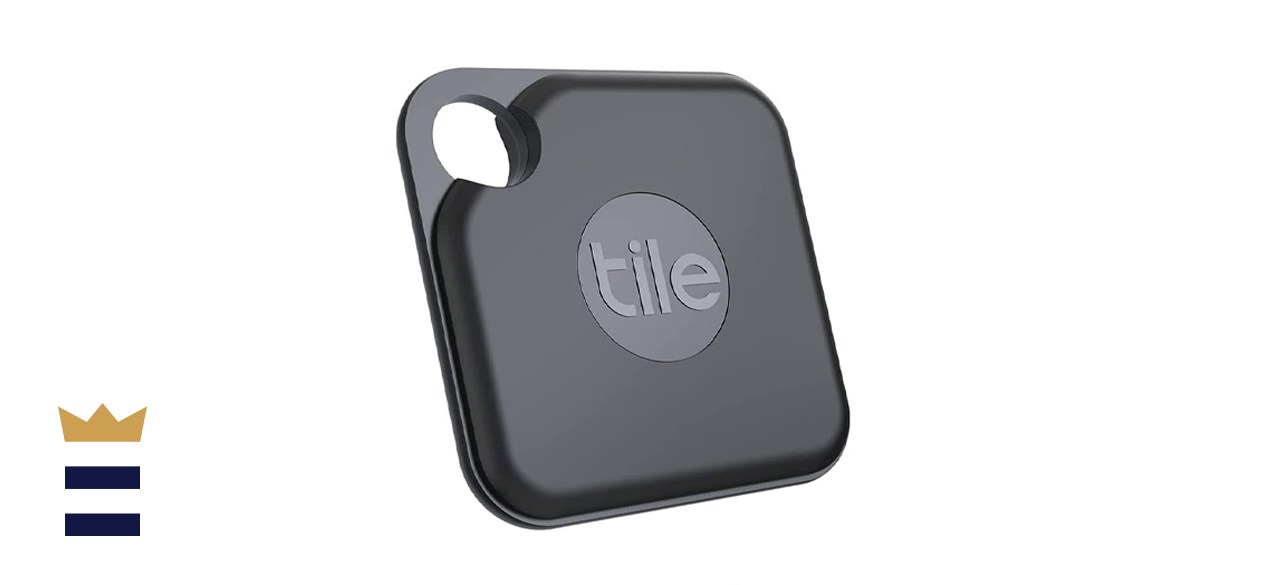
There’s no more need to worry about losing essential items such as keys, purses or a pet again with a Tile Pro. Simply attach the Tile to anything you never want to lose. If you ever misplace that object, you can use Amazon Alexa, Google Assistant, Xfinity, Siri or a smartphone to locate it quickly.
If you’d like to share your favorite photos of your parents and grandparents, the best way to do that is to buy them a digital picture frame. This model connects to Wi-Fi so you can send your photos directly to the frame to be displayed. Your parents and grandparents won’t have to do a thing except enjoy all of the pictures you send.
Not every book is available in larger print. However, with a Kindle Oasis, you can adjust the font size and contrast to make any book easier to read. It is waterproof so that you can take it to the beach, and it offers a quick and natural page-turning action. If the recipient prefers listening, you can pair this Kindle with Bluetooth headphones to listen instead of reading.
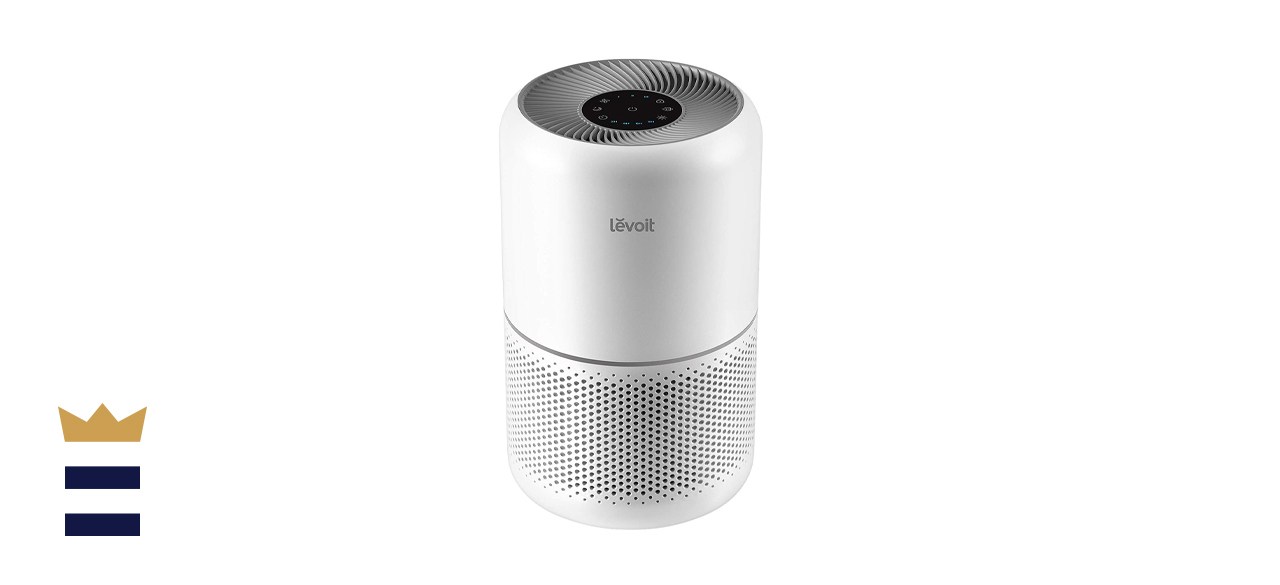
Indoor pollution can be as much as five times higher than outdoor pollution. To help your parents or grandparents breathe easier, consider this compact air purifier. With a True HEPA filter and VortexAir technology, you can clean all the air in a room in as little as 12 minutes. This device has a variety of replacement filters, such as a toxin absorber filter for VOCs and a pet allergy filter for animal dander. It even has a silent setting to use when you sleep.
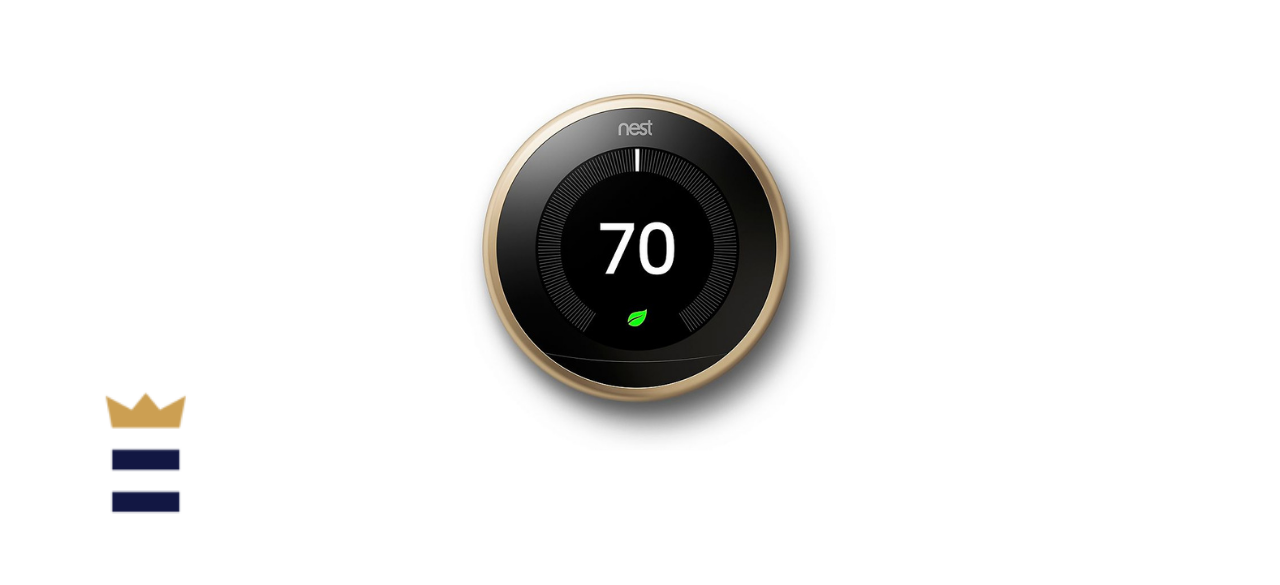
Automating your home is cool when you are young, but it can become necessary as you grow older and mobility becomes more difficult. The Google Nest Learning Thermostat learns your habits and programs itself, so your loved ones are always comfortable. If you need to override the settings for any reason, you can do so through your smartphone.
While an Echo Show 8 can do many amazing things, the most important feature is making video calls to friends and family members simply by using your voice. The auto-framing technology ensures you stay centered in the picture no matter how much you move about, and it can function as a security device to check in with its built-in camera. As your parents or grandparents become more comfortable with the Echo Show 8, they can use it to control all other compatible devices in their home, from lights to locks.
BOSTON (AP) — Jerry Remy, a Boston Red Sox second baseman who went on to become a local icon as a television broadcaster, has died of cancer. He was 68.
The Red Sox confirmed that Remy died on Saturday night. He had a long and public struggle with lung cancer, and drew thunderous applause at Fenway Park earlier this month when he threw out the ceremonial first pitch at a playoff game while using an oxygen tube.
Remy was a former smoker who had a yearslong battle with lung cancer, including surgery for the disease in November 2008. His struggle with the illness was well known to baseball fans. Support from Red Sox fans helped him as he underwent years of treatments for the disease, he told reporters in 2018.
“It's amazing the impact that you have when you've been around 31 years. That you have on people,” he said. “Red Sox fans especially, who welcome you into their home for that long. It's kind of a nice feeling. It's kind of a nice feeling that they care.”
Remy had spent 10 seasons in the majors — the first three with the California Angels and the last seven with Boston — before retiring after the Red Sox released him on Dec. 10, 1985. Remy hit .275 with seven homers and 329 RBIs in 1,154 games.
But it was as a Red Sox announcer, a job he began in 1988, that he captured the hearts of fans. Combining sharp analysis and a sense of humor that sometimes led to long, on-air bouts of laughter involving him and former Boston play-by-play announcer Don Orsillo, Remy gained a legion of listeners.
Remy “left an indelible mark on this club and on an entire nation of Red Sox fans,” Red Sox principal owner John Henry said in a statement Sunday.
“He devoted his entire career to baseball and whether from his seat in the clubhouse or his perch above the field in the broadcast booth, he took generations of rising Red Sox stars and a multitude of fans along for the ride with him,” the statement said.
Known as “RemDawg” by generations of New Englanders, Remy was elected by fans as first president of “Red Sox Nation” late in the 2007 season. The club had decided to capitalize on the passions of followers who were known by that name by creating a formal fan club.
Born in Fall River, Mass., and raised in nearby Somerset, Remy returned to his local team after three seasons with the Angels in which he hit .258 while averaging 148 games a year. He was traded to the Red Sox on Dec. 8, 1977 for pitcher Don Aase and cash, became a free agent on Nov. 13, 1981 and re-signed with Boston on Dec. 8, 1981.
Hall of Famer Carl Yastrzemski, who played with Remy in Boston, remembered his former teammate on Sunday as a “very, very hard worker” and a good friend.
“He made himself an outstanding player. He carried those same work habits over to the broadcast booth,” Yastrzemski said in a statement.
___
Whittle reported from Portland, Maine. Freelancer Ken Powtak contributed to this report.
Get the free WAVY News App, available for download in theApp StoreandGoogle Play, to stay up to date with all your local news, weather and sports, live newscasts and other live events.
VIRGINIA BEACH, Va. (WAVY)— Harygul's Halloween Super Store in Pembroke Mall was busy this morning as people got in that last-minute costume shopping.
Turns out, the Virginia Beach location has had a lot of foot traffic ahead of Halloween.
“We really have served more customers this year than any other year. Because it's been 2 years since you've been able to have a safe outdoor Halloween, so I think the families of Hampton Roads came out in droves,” said D. Nachnani.
The way he sees it, lots of shoppers means lots of opportunities for folks to donate blood to the American Red Cross. That's what sparked their catchy, Get Blood, Give Blood campaign.
“If you give us a pint of blood, we'll give you some fake blood for Halloween,” said Nachnani.
Customers can pop just across the shop to the donation center. Nachnani says his goal this weekend is to save 100 lives. He says each pint saves 3 lives so he's encouraging you to step up and help as there's a big blood shortage right now.
Harygul's is celebrating its 31st year.
"The American Red Cross said they needed blood donations because of the challenges we've had over the last 400 days of covid and all of my staff stepped up,” said Nachnani.
Get the free WAVY News App, available for download in theApp StoreandGoogle Play, to stay up to date with all your local news, weather and sports, live newscasts and other live events.
DALLAS (AP) — American Airlines has canceled about 1,600 flights over the past three days, citing blustery conditions in Texas and a shortage of flight attendants.
The disruptions were similar in their initial cause and size to problems suffered in early Octoberby Southwest Airlines, and they raised ominous questions about whether major airlines are prepared for the busy upcoming holiday travel period.
By midday Sunday, American had canceled more than 700 flights — almost 30% of its schedule for the day — after scrapping nearly 900 flights on Friday and Saturday, according to tracking service FlightAware.
American's troubles began late in the week, when high winds at times shut down flights and prevented the airline from using all runways at its busiest hub, Dallas/Fort Worth International Airport. That made it difficult for American to get crews in position for upcoming flights, and the cancellations and delays grew worse through Saturday and Sunday.
“To make sure we are taking care of our customers and providing scheduling certainty for our crews, we have adjusted our operation for the last few days this month by proactively canceling some flights,” David Seymour, the airline's chief operating officer, said in a note to employees on Saturday.
Seymour said American was able to put most of the stranded travelers on other flights the same day.
Earlier in October, Southwest canceled well over 2,000 flights after disruptions that started with weather problems in Florida and were compounded by staffing shortages.
Airlines were barred from laying off workers during the pandemic as a condition of billions in federal pandemic relief, but that didn't stop them from persuading thousands of employees to accept cash incentives and quit voluntarily. American, Southwest and others are now hiring employees to replace some of those who left in 2020.
Seymour said American is staffing up, with nearly 1,800 flight attendants returning to their jobs starting Sunday and others on Dec. 1, and at least 600 new hires on board by the end of the year. He said the airline is stepping up hiring for other jobs including pilots and reservations agents in time for the holidays.